
A Court Made of Performance
Wolf HallThis thread traces how political authority depends on display, self-control, and the management of what others believe they see.
increasing Bearing strength in each event
 decreasing
Bearing strength in each eventdecreasingWolsey’s Magnificence
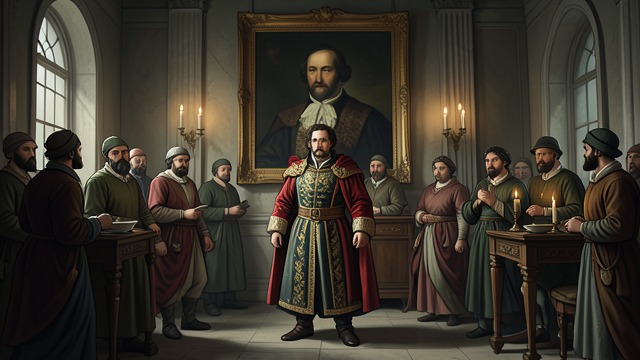
Power on Display
Processions and possessions
Wolsey’s clothing, household, and public ceremony make authority visible. When his palace is stripped, the inventories expose how quickly splendour can be converted into royal property.
The lesson for Cromwell
Cromwell learns that performance can soften force, buy time, and preserve dignity. He also sees how a change of favour can turn the same performance into humiliation.
Arranging the Face

Composure as a Tool
A practiced mask
Cromwell watches courtiers register fear, doubt, or anger before arranging their faces. He learns to conceal his own thoughts and let others fill gaps with their assumptions.
Political utility
A controlled appearance helps him move between the king, Anne, foreign ambassadors, and opponents. It protects him, but also makes him difficult to know even to his allies.
The Painted Minister
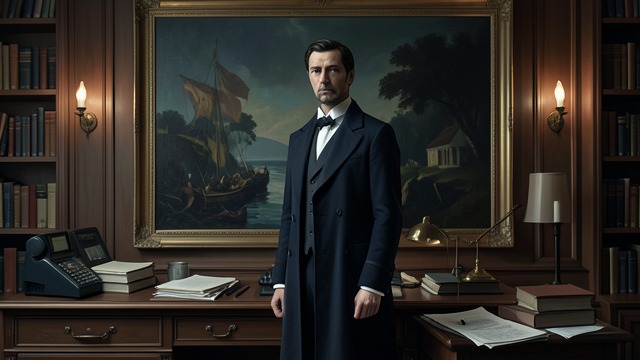
Seeing Himself
Holbein’s portrait
When Hans Holbein completes Cromwell’s portrait, the painted face seems colder and more dangerous than the man recognizes. The image presents him as a figure enclosed by papers, books, and instruments of office.
A public identity
Others read the portrait as evidence of force and calculation. Cromwell sees that a political image can become independent of the person who sits for it.
1527–1529
1531–1533
1534
